
Blog · April 8, 2026
35mm and the other film formats in your family's boxes
35mm, 126, 110, and the odd ones: identifying the film formats a family collection actually contains.
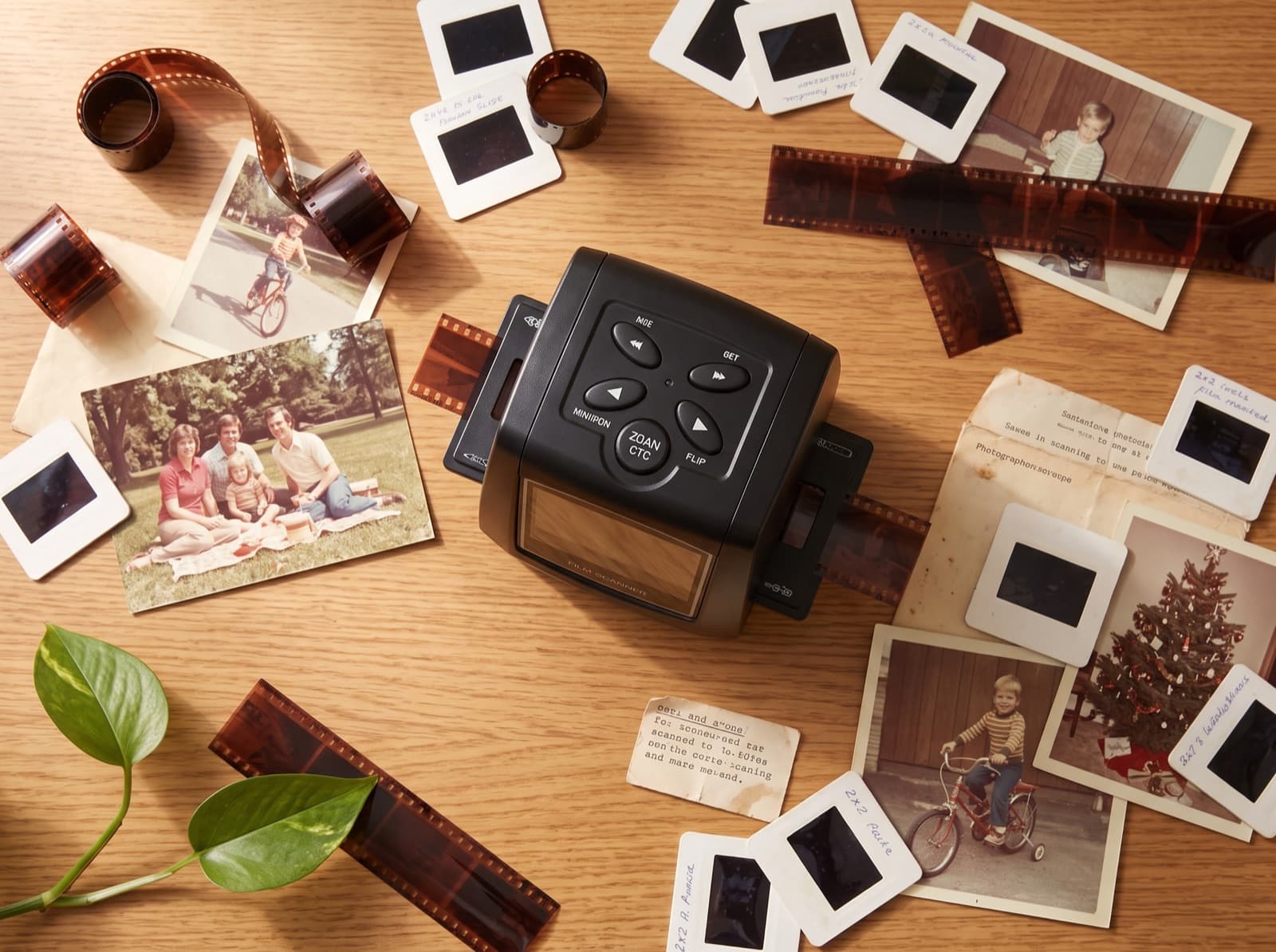
Most home scanners handle 35mm, and most of a typical family collection is 35mm. But the shoebox usually holds a few surprises. Here is how to identify what you find.
35mm, the standard
Strips 35mm wide with sprocket holes along both edges, frames of 24 x 36 mm. Slides in 5 x 5 cm mounts are almost always 35mm too. If it came from a normal camera between 1960 and 2005, it is probably this. Standalone scanners like the MemoryVault Box take 35mm negatives and mounted slides directly.
126 film
Square frames, 28 x 28 mm, from Instamatic-style cartridge cameras of the 1960s and 70s. The strips are close to 35mm wide, and mounted 126 slides fit standard mounts, so they often scan in a 35mm scanner with slight cropping.
110 film
Tiny strips, 16mm wide, from the pocket cameras of the 1970s and 80s. Too small for standard 35mm holders. Prints from 110 are usually the better scanning source.
The rarities
- 127 and 620 medium formats from box cameras, wider than 35mm
- Disc film from the 1980s, a rotating flat disc
- 8mm and Super 8 movie reels, which are cine film, a different project
The practical approach
Sort the collection by format first. Scan all the 35mm yourself, which is usually 80 to 90 percent of everything, and set the rarities aside for a specialist service. Scanning the bulk at home pays for outsourcing the exceptions.
Ready to scan your own archive
The MemoryVault Box digitizes 35mm negatives and slides in 3 seconds per photo, no computer needed, with a 90-day money back guarantee.
Get the Box, from $149.99