
Blog · August 14, 2026
How long do film negatives last
Color negatives fade measurably within decades. Here is what the timeline really looks like and what speeds it up.
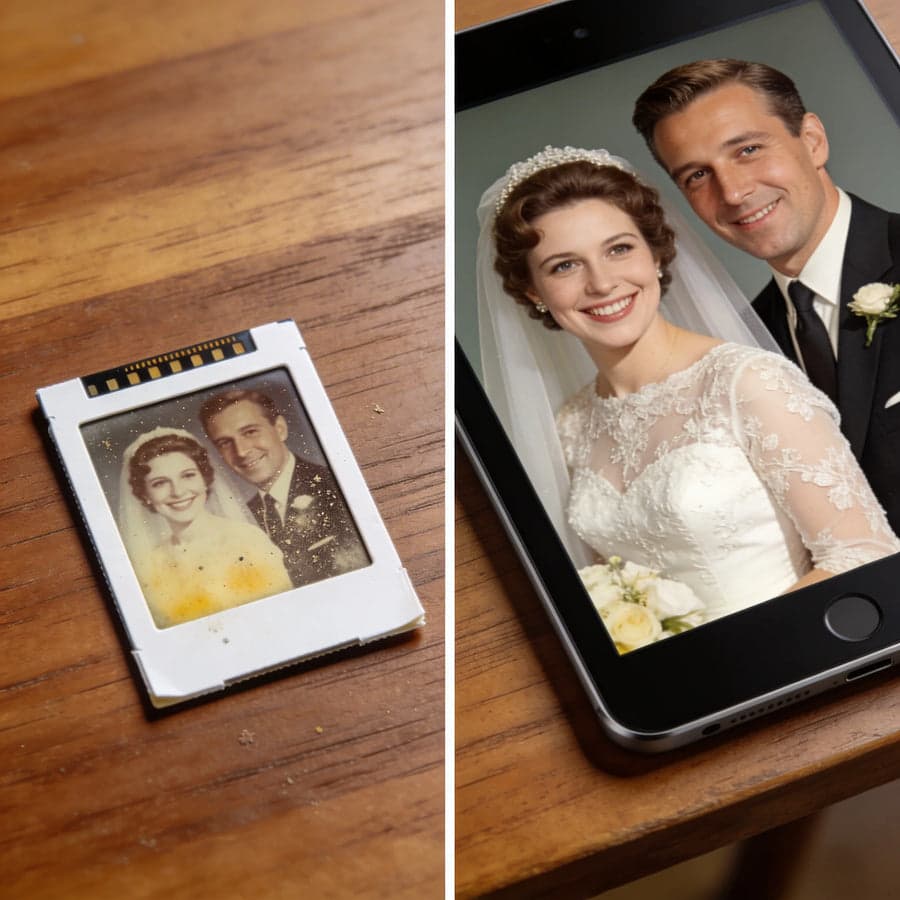
Film does not last forever. Color negatives and slides are chemical objects, and the chemistry keeps working long after the photo was taken.
The realistic timeline
- Color negatives from the 1970s to 1990s: noticeable color shift within 20 to 40 years
- Consumer slide film: similar range, with some stocks failing faster
- Black and white negatives: the survivors, often fine for 50 years or more when stored well
The reds usually go first, then the yellows. That is why so many old prints look orange or pale blue.
What accelerates fading
Heat is the main enemy. An attic that hits 100 degrees in summer can double the pace of decay compared to a closet in the living space. Humidity brings mold, which etches the emulsion permanently. Light exposure matters less for negatives stored in boxes, but it destroys prints on display.
What you can still save
A faded negative is rarely a lost negative. Most of the image information survives under the color shift, and scanners with backlight compensation and color correction recover a surprising amount of it. Slides from the 1970s that look brown to the eye often come back with visible sky, skin tones, and grass.
The practical conclusion
Storage buys time, digitization stops the clock. Scan the collection once, back it up twice, and the fading stops mattering.
Ready to scan your own archive
The MemoryVault Box digitizes 35mm negatives and slides in 3 seconds per photo, no computer needed, with a 90-day money back guarantee.
Get the Box, from $149.99