
Blog · May 2, 2026
Kodachrome slides: identifying and preserving them
The most famous slide film ever made ages differently from everything else. How to spot Kodachrome and what to expect from scans.
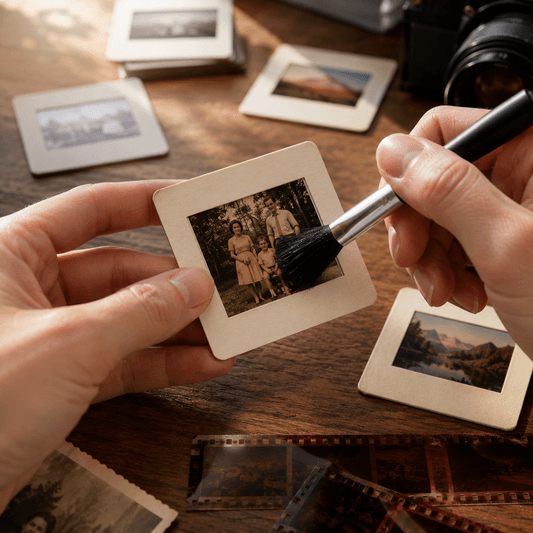
If your family shot slides between 1940 and 1990, some of them are probably Kodachrome, and that is good news.
How to identify it
- Cardboard mounts stamped Kodachrome, the obvious clue
- A distinctive look: dense blacks, restrained reds, and a certain glow on skin tones
- A relief image: tilt the slide under a lamp and the emulsion side shows a faint 3D etching of the image, unique to Kodachrome
Why it survived better
Kodachrome's dyes were added during development rather than built into the film, which made the finished slide unusually stable in dark storage. Kodachrome kept in boxes for 60 years often shows barely any fading, while other films of the same era went orange.
Its weakness is the opposite one: projected or displayed in light, it fades faster than its rivals. The carousel favorites that got shown every Christmas are often the worst-preserved frames in the tray.
Scanning notes
Kodachrome's density means scans can come out dark in the shadows; backlight compensation helps, and it is worth rescanning an important frame if the first pass looks murky. Colors need little correction, which is a pleasure.
Preserve them anyway
Stability is relative, not eternal. The film is decades old, the mounts collect mold, and every viewing in a projector cooks it a little. Scan the Kodachromes with the rest, and enjoy that they mostly come back looking like the day they were shot.
Ready to scan your own archive
The MemoryVault Box digitizes 35mm negatives and slides in 3 seconds per photo, no computer needed, with a 90-day money back guarantee.
Get the Box, from $149.99