
Blog · June 4, 2026
How to store negatives and slides so they last
Cool, dry, dark, and acid-free: the storage rules that slow film decay to a crawl.
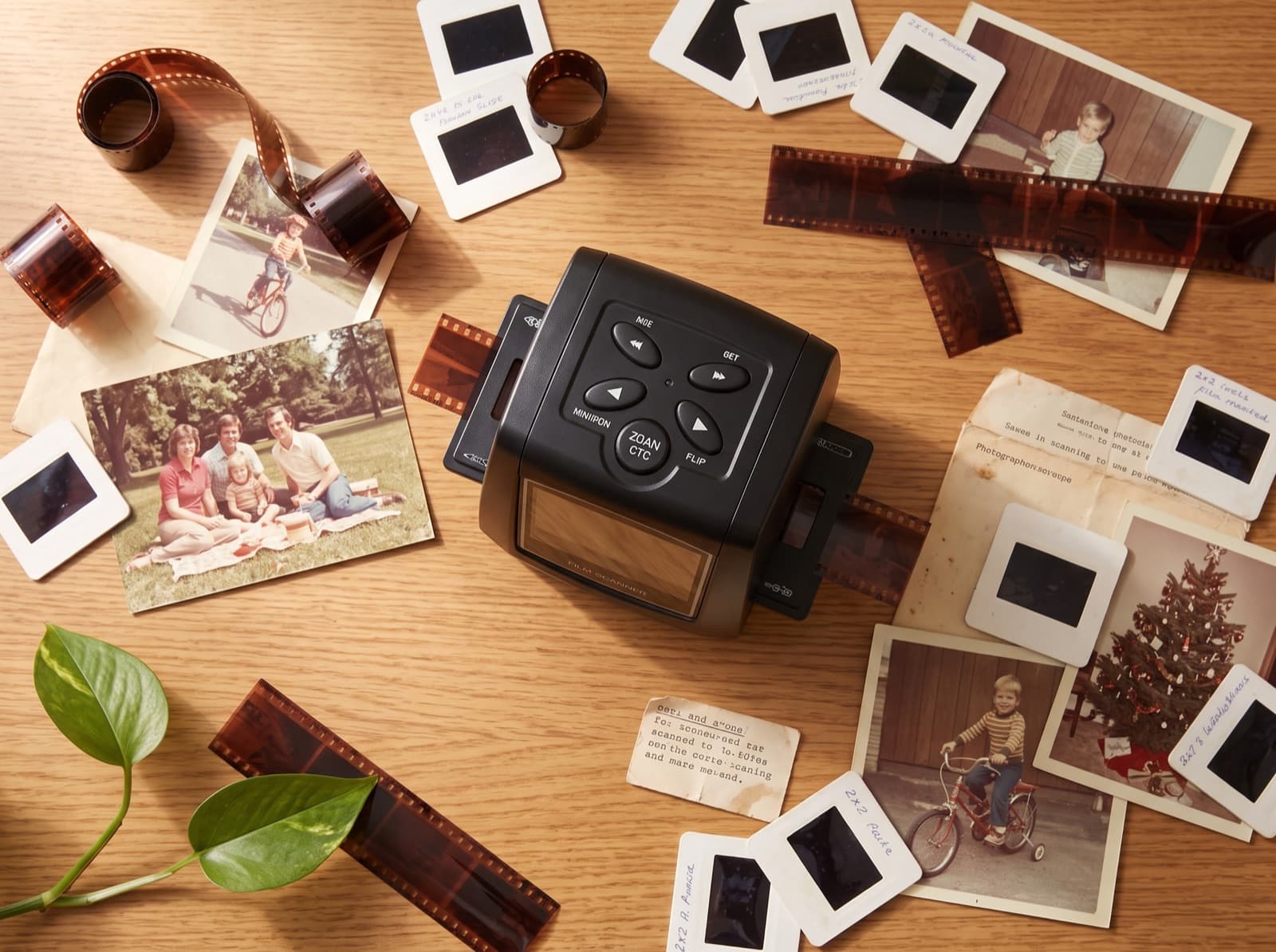
Even after scanning, the originals are worth keeping well. Stored properly, film that has survived 50 years can survive 50 more.
The four rules
- Cool: below 21 degrees C is good, below 15 is better. Avoid attics and garages, which cycle hot and cold
- Dry: 30 to 50 percent relative humidity. Damp basements grow mold that eats emulsion permanently
- Dark: light fades dyes. Boxes beat open shelves
- Acid-free: ordinary paper envelopes and rubber bands damage film over decades. Archival sleeves are cheap
What to put film in
Polyethylene or polypropylene sleeves, then a labeled archival box. Avoid PVC plastics, which off-gas, and avoid anything that smells like vinegar, including film that itself smells of vinegar: that odor is film decay in progress, and those reels should be isolated from the rest and scanned first.
Where in the house
A closet on the main living floor is usually the best spot available: temperature-stable, dark, and dry. The classic mistakes are the attic, over-heated in summer, and the basement, humid year-round.
Label everything
A box labeled 1968-1974, scanned March 2026 turns a mystery into an archive. Put the same note in the digital folder so the paper and the files point at each other.
Storage slows decay. Only scanning stops the loss. Do both.
Ready to scan your own archive
The MemoryVault Box digitizes 35mm negatives and slides in 3 seconds per photo, no computer needed, with a 90-day money back guarantee.
Get the Box, from $149.99