
Blog · May 19, 2026
What is a film negative and how does it work
The orange strips in your family's envelopes are the master copies. A plain explanation of how negatives work.
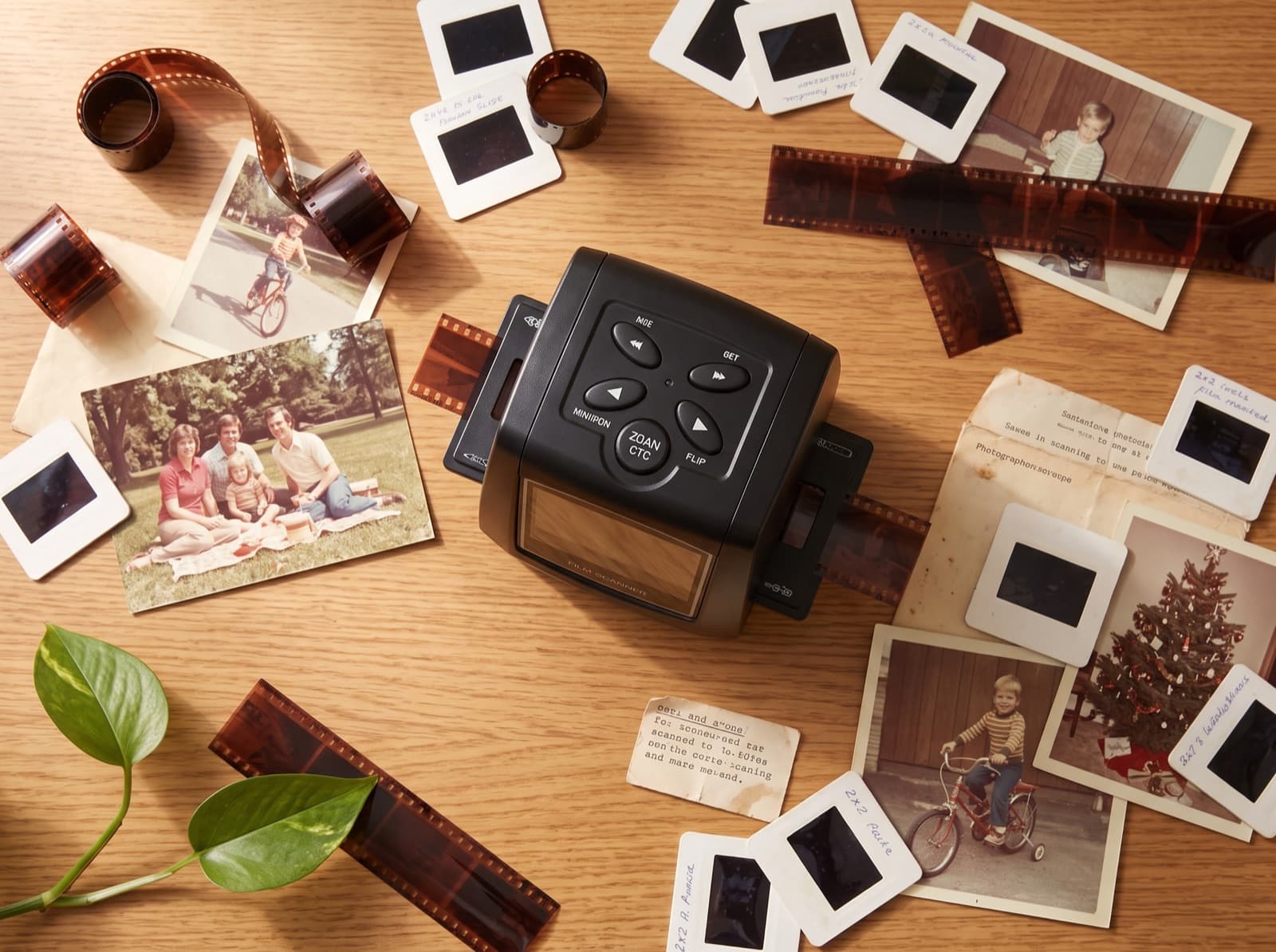
Every print in your family albums started life as one of those orange strips. Understanding them takes two minutes and makes the archive make sense.
The inverted image
A negative records light in reverse: bright sky becomes dark film, dark hair becomes clear film. Color negatives add an orange mask layer that helped printing machines get color right. That is why you cannot really read a negative by eye, and why it looks orange overall.
Why negatives are the master copy
The print on the wall is a copy, made once, on paper that fades in daylight. The negative is the original capture, with more detail and more dynamic range than any print made from it. When a print is lost or faded, the negative can produce a better copy than the original print ever was.
This has a practical consequence: given a choice between scanning a print and scanning its negative, scan the negative.
Reading the strips
35mm negatives usually come in strips of 4 to 6 frames, stored in paper or plastic sleeves. Frame numbers along the edge match the numbers on the back of old prints, which lets you trace which negative made which photo.
Scanning them
A film scanner shines light through the negative, captures it with a sensor, and inverts the colors digitally, removing the orange mask in the process. On a standalone unit this is automatic: insert the strip, and the screen shows the photo in normal colors.
Ready to scan your own archive
The MemoryVault Box digitizes 35mm negatives and slides in 3 seconds per photo, no computer needed, with a 90-day money back guarantee.
Get the Box, from $149.99